
bluesamoyed77
github.com/qiulinfanThis is Qiulin Fan, from Shanghai and currently based in Ann Arbor. I'm completing my B.S. in Honors Mathematics and Computer Science at the University of Michigan (2023–2026).
Over the past few years I have worked on game engine physics and particle systems, gameplay engineering, and agentic knowledge systems for games. I previously worked at Unity China and NetEase Games.
I am currently seeking out of engineering and looking for research opportunities in generative world models, 3D vision, and robot learning.
My favorite animation characters are Yatogami Tohka and Kuchiki Rukia.
Useful (to me) little tools I make
My agent harness
 omp
My version of oh-my-pi as my daily agent harness, with a desktop and browser GUI that also sits in VS Code and Obsidian (justnotes) side bars, Claude Code hooks and nested AGENTS.md, file checkpoints to rewind code, approval modes with an auto mode, agent presets, sessions that can message each other, and in-place updates from my own releases.
My code editor
 Zed
Slight modifications on Zed, my main editor. Mostly I adjusted its ACP support so external agent threads stay in sync with the agents' own session lists, and removed the Zed cloud services I don't need.
My note taking app
 justnotes
My little open source note taking app substituting Obsidian, with rich Markdown and native TeX support, and compatible with all Obsidian plugins. I use it to edit Markdown and LaTeX files.
My personal knowledge base
My agentic knowledge base system, especially designed for systems with formal logic and for research paper reading.
My 2D game engine (very nostalgic)
 pocket2d
This is a nostalgic 2D game engine built from the project of my EECS 404 Game Engine Architecture course: a C++26 / SDL3 runtime and editor with Lua gameplay. Agents play and test games through a structured protocol with deterministic stepping and replay; games package for macOS, Windows, Linux and the web, with two-player rollback netplay.
My 2D game art pipeline
It turns generated images into clean pixel art. Perfect Pixel lattice recovery places every pixel 1:1 on a shared canvas with a canonical palette; eight-direction turnarounds rotate continuously; actions are animated from authored key poses with kinematics, joint-anchor alignment, controlled inbetweens and procedural animation. Everything ships as reproducible agent Skills.
My 3D game art pipeline
It turns a design brief into audited 3D assets. A requirement matrix drives license-verified sourcing or hosted generation (Meshy, Hunyuan, Tripo); Blender adapts geometry, UVs, PBR materials and rigs; humanoid animations are retargeted and aligned; and an isolated audit chain with round-trip validation issues a receipt before anything reaches Unity or Unreal.
Amoris
My low-key huge project, and my favorite. It is the implementation of an idea of mine: a game engine designed for agent-native gameplay and debugging.
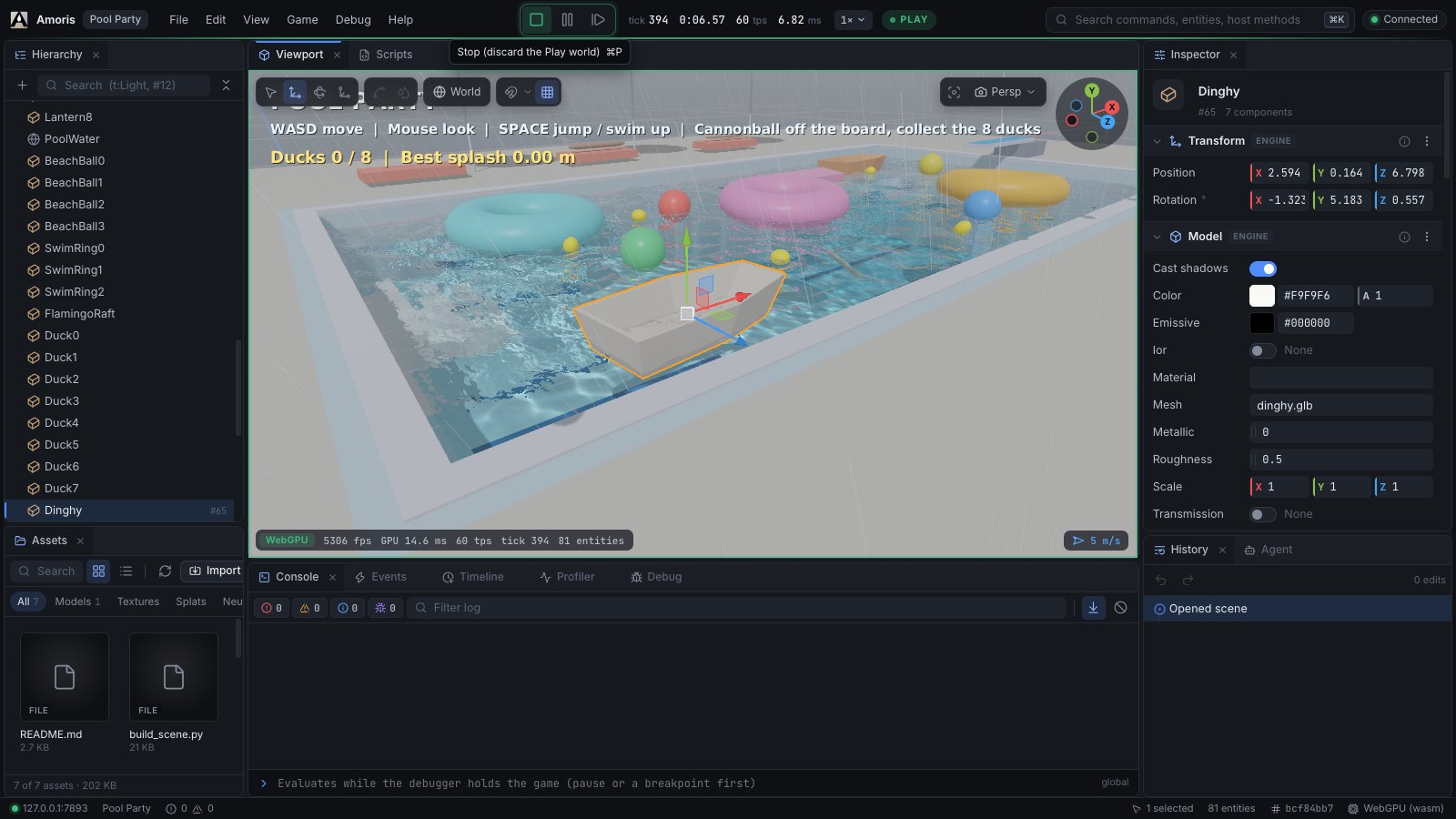
Agents play it
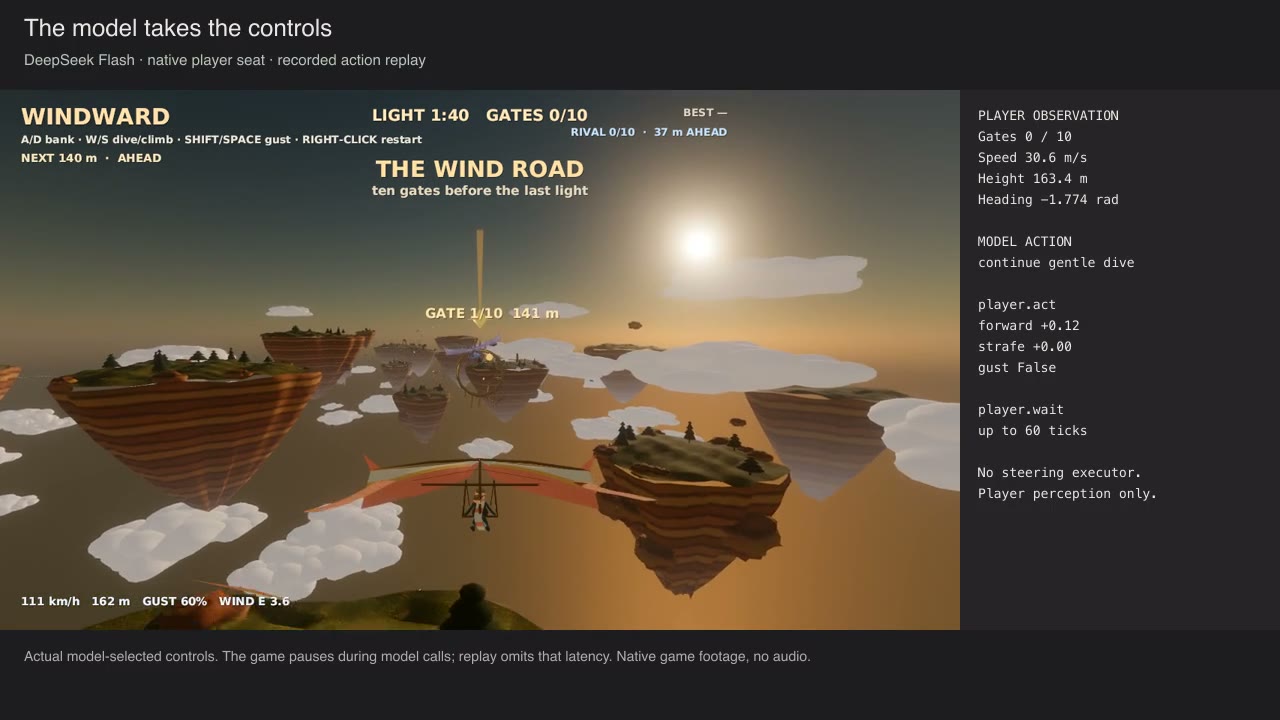
The editor, the CLI, HTTP and MCP share one command API. An agent can play through a player seat the engine enforces, seeing and doing only what a player could. The picture is DeepSeek Flash flying Windward through the native player seat, replayed from its recorded calls.
Agents debug it
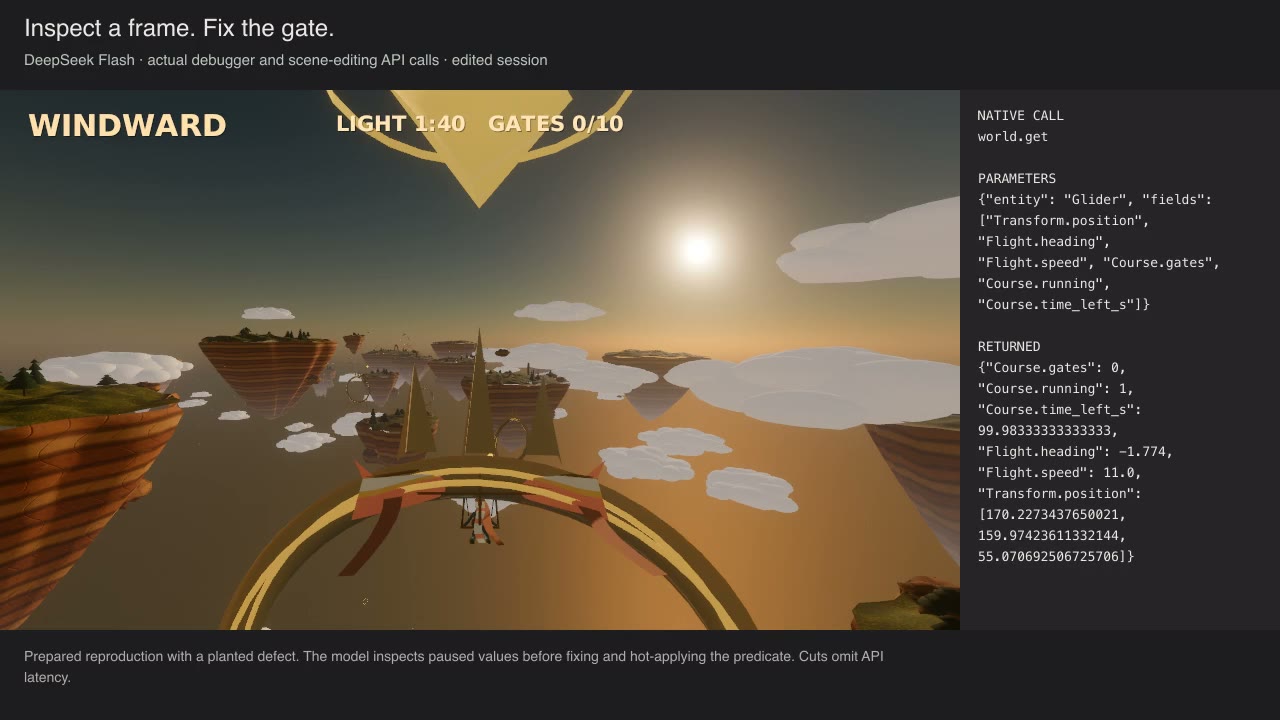
The simulation is deterministic, so any run can be snapshotted, replayed, forked and stepped back in time. TypeScript gameplay hot-updates at a tick boundary, with a source-level debugger and a profiler.
And it still looks good
A wgpu renderer on Metal, Vulkan, Direct3D 12 and WebGPU, with GPU culling, TAA, GTAO, baked GI and ray-traced shadows and reflections, and GPU water that computes the same bits on every device, so it replays with the world.
I barely promote my projects, but I really love them.
If you want some games, you can also go to my itch.io. These are made on my own engines, mostly in one shot:
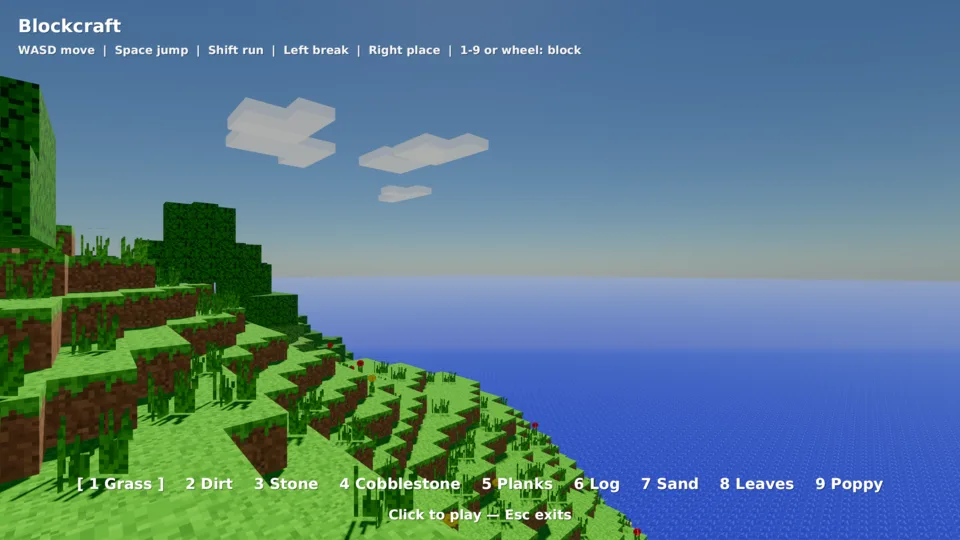 Blockcraft on Amoris A voxel sandbox island. Break and build blocks while the engine's shallow water floods broken banks and drains into holes.
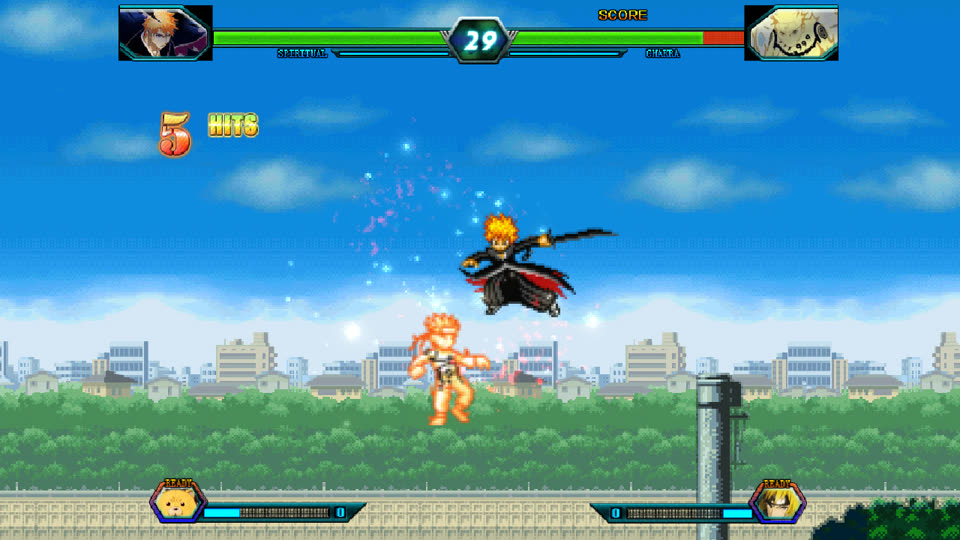 Bleach vs Naruto on pocket2d A fan remake of 5DPLAY's fighting game, with the original roster and online versus over rollback netcode.
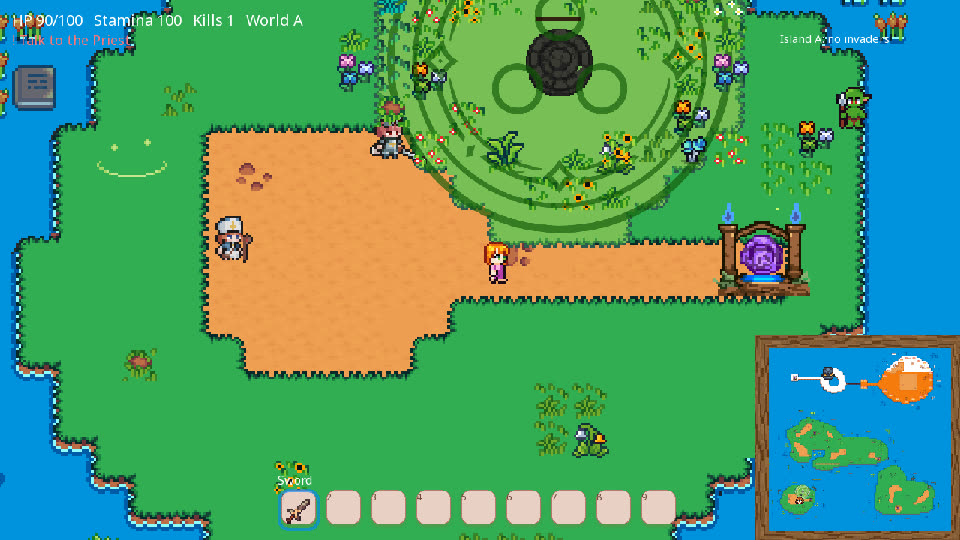 Village Rim on pocket2d Our four-person Unity adventure, moved onto pocket2d with its gameplay rewritten in Lua. The itch.io page has the original Unity build.
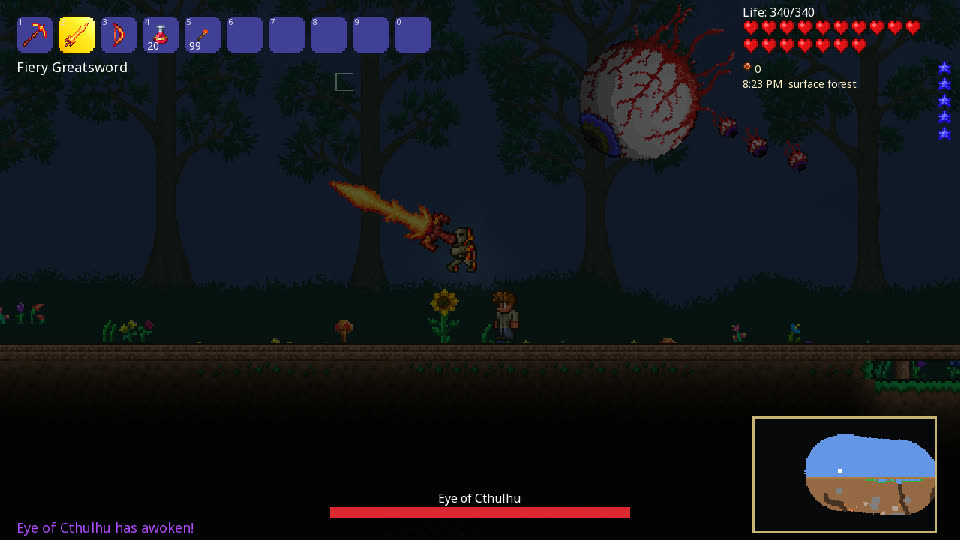 PocketTerraria on pocket2d A Terraria-style sandbox built to test pocket2d, played all the way to the Moon Lord. Video only; it is not released.
And two games that agents made on Amoris by themselves, playable in a desktop browser with WebGPU. Each was made by one autonomous agent from a single prompt, with nobody answering its questions.
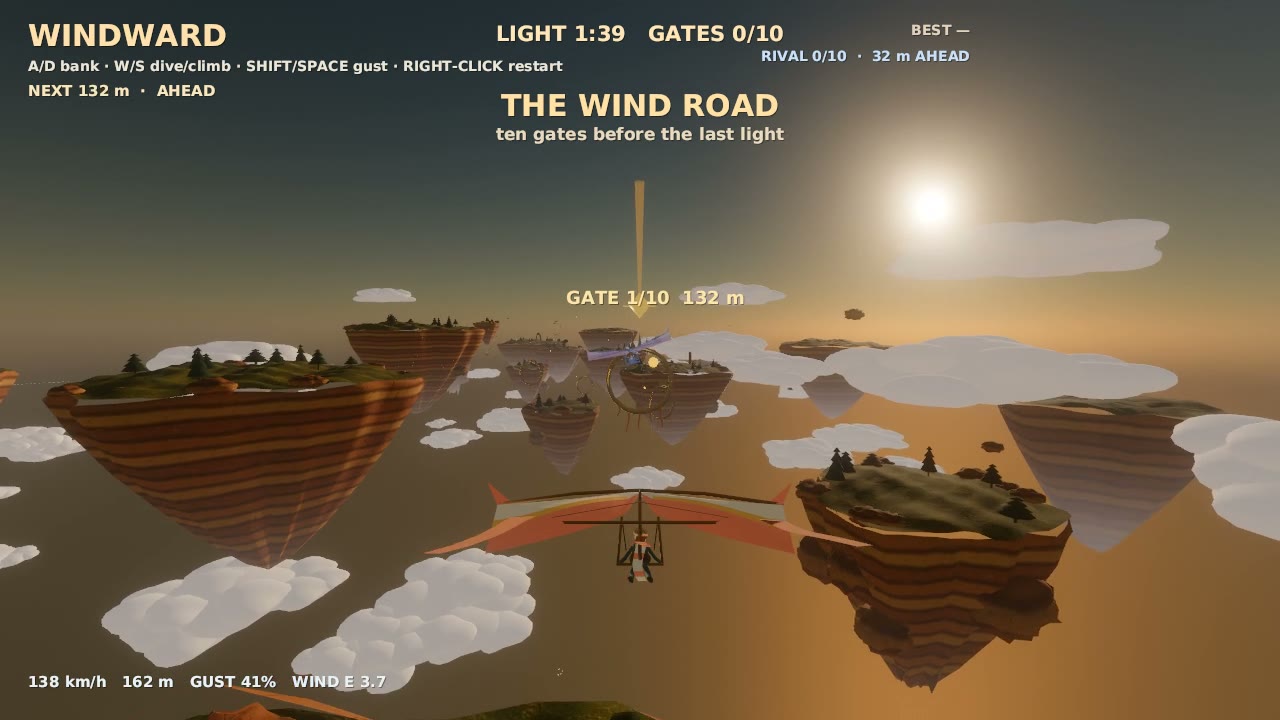 Windward · prompt and run Fly a glider through ten wind gates between floating islands. DeepSeek Flash, about 88 minutes, 356 steps
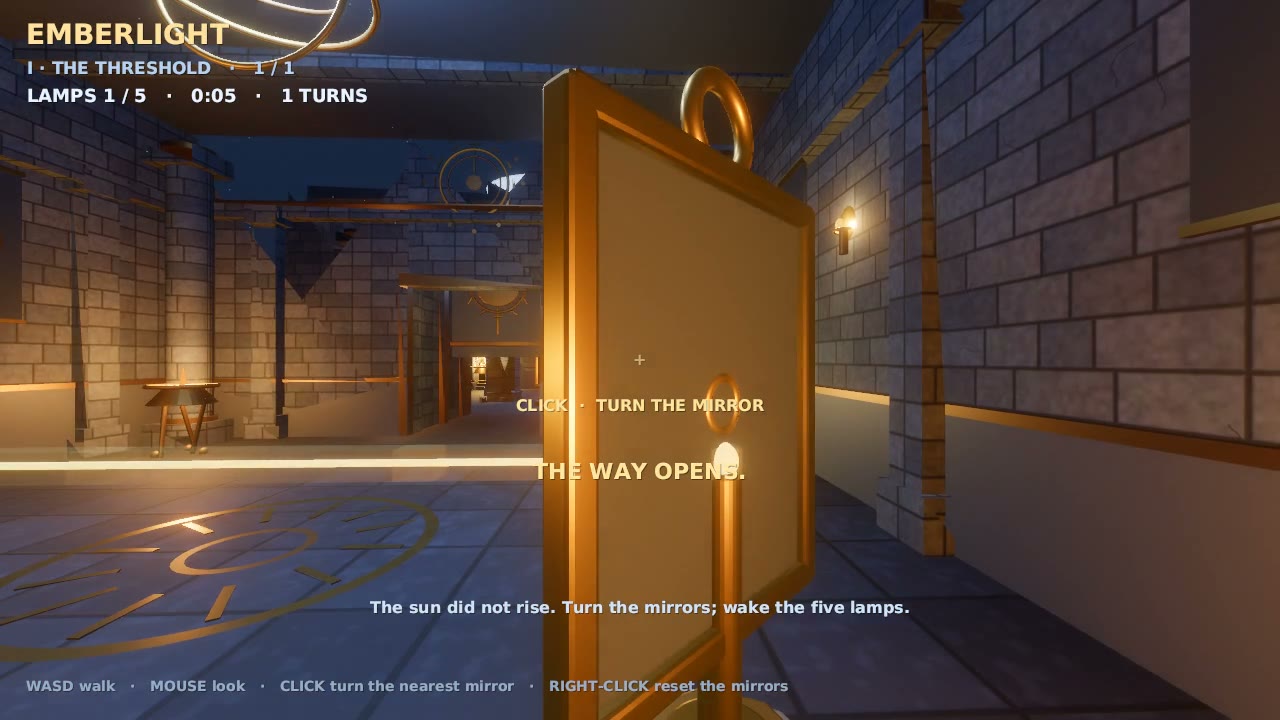 Emberlight · prompt and run Turn mirrors and a prism to light five lanterns across four observatory chambers. DeepSeek Flash, about 100 minutes, 421 steps