7 Foundations
这一讲是 recap 以前学过的内容并介绍一些更加 rigorous 的概念.
7.1 Machine Model 机器模型
一个 name(名称) 指 some entity such as a variable, function, or type.
一个 varibale(变量) 是一个指代 memory 中的一个 object 的 name. (variable 就是一种 name!)
一个 name 具有它的 scope(作用域),scope 决定了什么区域的 code 能够使用该 name 来指代它表示的 entity.
一个 declaration(声明) 就是引入一个 name 的行为,并且 declaration 处是该 name 的 scope 的起点.
一个 object(对象) 就是 memory 中的 a piece of data.
object is locateda at some address(地址) in the memory.
object 的 lifetime(生命周期) 就是 legal to use this object 的时期. 一个 object 在某个时刻被 create,在某个时刻被 destroy,从被 create 到被 destroy 的这段时间就是我们能够 legallu use it 的时间. 它取决于该 object 的 storage duration.
为了学习 memory 中 objects 和用来指代它们的 variables 的变化,我们引入 machine model.
Machine Model 就是对于 codes 如何 relate to program execution 的一个描述.
最基础的 machine model 就是把 memory 看做一个像 array 的东西的图. 如下. 之后会有更复杂的 machine model
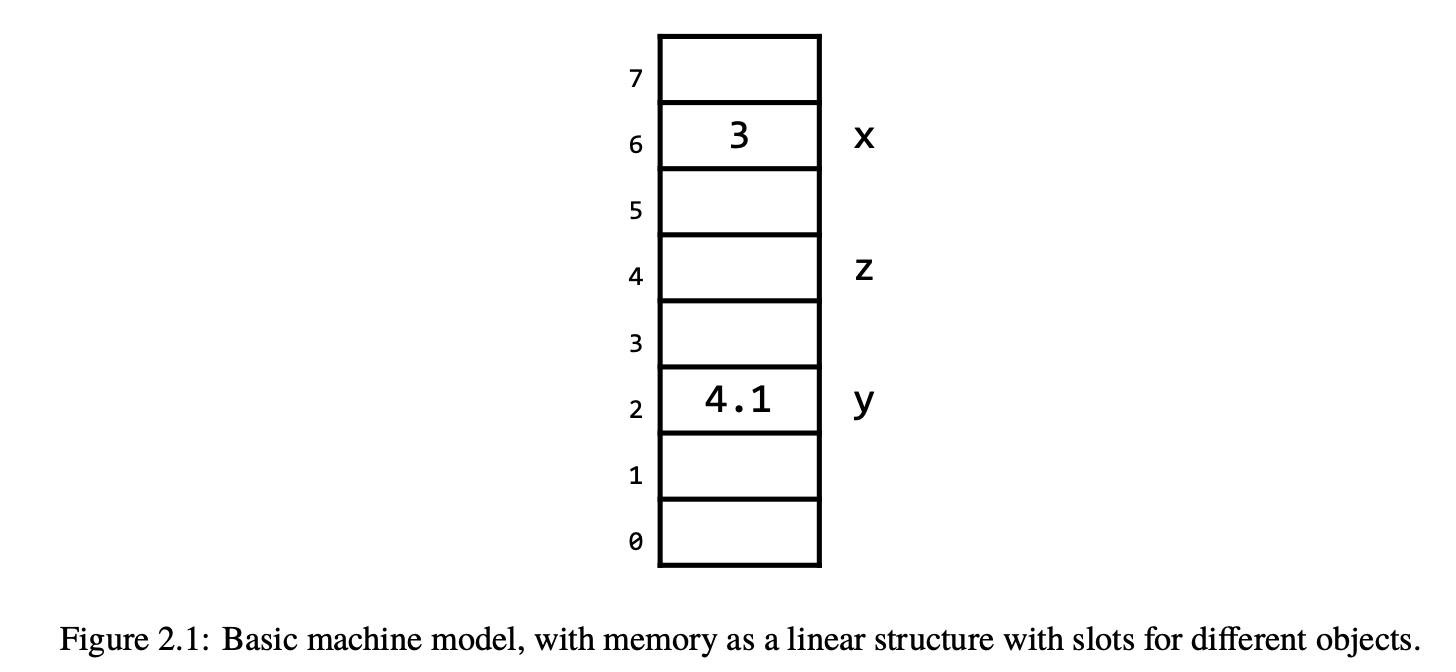
现在我们开始讲 object 的储存周期.
7.1.1 Storage Duration
有三种 Storage Duration.
- static (也叫 Global 全局对象): 这种 object 的 lifetime 是 the whole program.
- automatic (也叫 Local 局部对象): 这种 object 的 lifetime 是被绑定于一个特定的 scope,比如某一段代码块.
- dynamic (动态): static 和 automatic durations 都是由 compiler 控制的,而 dynamic duration 却是由 programmer explicitly create and control 的.
本课程将只讲 static 和 automatic 的 object.
Variable 和 memory object 并不等同. Variable 是和 source code 相挂钩的概念,而 memory object 则是和 runtime 相挂钩的概念. 同一个 variable 可以在不同时间指代不同的 object. 比如 a local variable in a functon that is called more than once. Dynamic storage duration 的 objects 不会和 一个 variable 关联.
7.1.2 Reference sematics and Value sematics 引用语义与值语义
我们都已经学过了 pass by reference 和 pass by value 的区别. 而我们知道,C++ 中 x = y 仅表示 modify the value of object x 而不是 change which object x is referring to,
如果一个行为中 x = y 表示前者,那么这个地方就叫做 value semantics(值语义);而如果表示后者,那么就叫做reference semantics(引用语义). 因而 C++ 这个语言的默认是 value sematics.
而 C++ 仅在 intializating new variable 的时候支持 reference semantics.
int x = 42; // initial x to refer to an object, and sets the initial value to 42.
int y = 99;
y = x; // assign the value of x:42 to y.
x = 55; // y is not becoming 55, because they are still pointing at different objects.
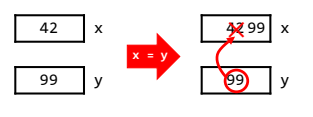
但是如果在 new variable name 的左侧加上一个 ampersand (&), 那么就能够把该 name 关联到一个现有的 object.
我们都知道,这个符号叫做 reference operator(取地址运算符),放在一个代表某个 object 的 variable name 左侧,可以提取它所代表的 object 的 memory address 来存放在指针变量里;但是在 initialization 的时候如果在新 varible name 的左侧加上 &,则并不是表示提取 address 的运算,而是 “将我们左边这个新的 varibale name关联到现有的右边这个 variable name 代表的 object 上”,通俗而言就是给对象取个新名字. 这就是 reference operator 的另一个用法. 这个用法和写函数时 pass by reference 的用法是一样的,即直接指向这块 address 上的 object 对其进行赋名/运算.
int x = 42;
int &y = x;
//y和x是同一个object, 值都是42, y是给它起的新名字
x = 24;
cout << y; //24, 值被改变了
z = 3;
y = z; //pass by value
cout << x; //3, 值被改变了
这里,y 和 x 是两个 variable,但是他们都和同一个 object associate了. 因而改变其中任何一个的值,另一个也会改变,不如说 y 和 x 是称呼该 object 的两个名字.
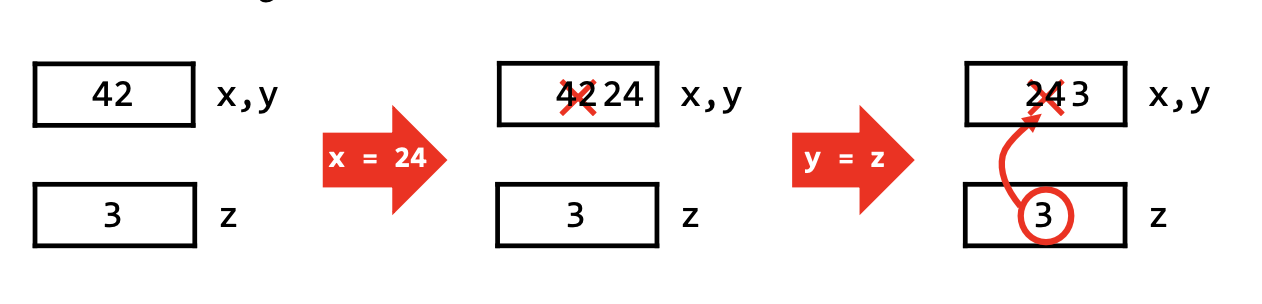
并且由于C++只支持在 initialization 时的 reference semantics, a variable 和 a memory object 之间的 association can never be broken! (except when variable goes out of scope). 也就是说你一旦 declare 了一个 variable,那么它就和你 declare 时让它 refer 的 object 绑定了,你无法重新给这个 variable 绑定新的 object!你修改它就是修改这个 object.
而对于当出了 scope 之后,这个 name 就无效了,我们的 object 就少了一个名字. 比如一个函数的 pass by reference 的参数,就是对一个变量取的一个新名字,而在 main() 函数运行过了这个函数之后,这个名字就失去了. 因而 pass-by-reference parameters 也叫做原 object 的一个 alias (别名),可以理解为我们在 Windows 桌面创建的快捷方式.
7.1.3 Compile time 和 Runtime
一个程序首先要 compile,其次再 execute (run).
Compile 一个程序是需要时间的. 这段时间里 compiler 会做一下的事情:
-
observe variable declarations: 观察代码里 variables 的 name, type, scope 和 value.
-
确定需要给每个 type 的 variables 的 size.
比如:
int 需要 4 bytes
double 需要 8 bytes
更复杂的 ADT: n bytes
(注意:一个 byte 就是 8 个 bits,一个 bit 实际上就是 binary digits,就是一个 0/1 的二进制数)
Compile time 就是 Compiler compile 你的 codes 的这段时间.
早在 compile time,compiler 就会决定好这段代码需要多大的 memory.
而 runtime 就是程序运行的时间. 这段时间 compiled code 被执行,variables 会以 objects 的形式被储存在 memory (RAM) 里,其大小就是这个 variable type 的大小.
(当然 variable 自身也会占据一定大小,就比如两个 int variable 都是同一个 object 的名字,那么这个 object 就只有 4 bytes,但是其实这两个名字也占据了一点 memory 使得它们能被识别。但这种东西我们就不管了。)
所以我们要注意的概念是:object 只在 runtime 产生,variable 是 compile time 就被识别了。
7.2 Function Calls and the Call Stack
7.2.1 Activation Record and stack 激活记录与栈
刚才我们介绍了最基本的把 memory 中的 object 看作类似 array 元素的 machine model,而现在我们介绍一个更加 structured 的 machine model,即被多种高级语言的 implementations 使用的:Stack-based memory management (基于栈的内存管理).
在大多数高级语言的 implementations 中,函数调用的数据都集中存储在一个 activation record(激活记录)中,activation record 就是给函数分配的 memory,分配给一个函数的 memory 就叫做 它的activation record 其中包含函数的所有 parameters 和 local variables,temporary objects 即 return address等,而本课程中我们只考虑 activation record 中的 parameters 和 local variables,忽略其他数据.
在 stack-based memory management 中,activation record 被储存在一个叫做 stack(栈)的 data structure 中. 当创建一条 activation record 后,它就会被放在 stack 的顶部,而第一个被销毁的 activation record 就是这条最新被创建出来的 activation record. 这就是著名的 last-in, first-out Behavior (LIFO,后进先出行为).
由于 activation record (more commonly)也叫做 stack frame(栈帧).
所以知道了 activation record 的概念后,我们就大概知道高级语言程序的一些粗略的数据存储方式了. 比如我们的 C++ 程序总是从 main() 函数开始的,而所有在 main() 函数中的 local objects 都存在 main() 的 activation record 中,而 main() 又调用其他函数,运行时在栈顶为这些函数创造 activation record,而创造的这个 activation record 的大小取决于它可能存储的局部变量数量. 就是说,这个 activation 的大小并不是自由改变的,而是从它被创建时就固定好的,根据里面的 local variable 数量决定(我们可能会觉得是 object 数量,但是并不是,而是 local variable 的数量,因为我们的理解基于简化模型,实际上作为 reference 的 variable 也占 memory,但是是 user 不能接触的.)
7.2.2 Function Call 的过程
我们知道,C++ 的程序就是运行函数. 最开始的函数就是 main();main() 会 call 其他函数,而其他函数又会 call 其他函数;运行完 main(),程序就结束了.
每一个 function call 的流程按照下面这个过程:
-
当 function 运行到嵌套在里面的其他 function 时,evaluate actual arguments to the function.
-
Make a new and unique invocation of the called function.
(1) Push a stack frame (2) Pass parameters
-
暂停 original function 的运行
-
运行 called function,可能会返回一些值 (optional)
-
运行 called function 结束后,重新在 original function left off 的地方 resume.
-
destroy called function 的 stack frame.
注意,这里从 3 到 4 的过渡被称为一种 active flow,因为这个过程是 code explictly 告诉 computer 去运行哪个 function,而从第 4 步到第 5 步的过渡被称为一种 passive flow,因为这个过程的 transfer of control 并不是 code 告诉 computer, 而是 computer 在运行 stack frame 的过程中自主的.
7.2.3 Activation Record (Stack Frame) 的运行例
为了理解程序运行的流程,我们考虑这一个完整的程序作为第一个例子:
void bar(){
}

void foo(){
    bar();
}

int main(){
    foo();
}
这一程序都看得出来,是 main() 函数调用 foo() 这个函数,而 foo() 这个函数内部再调用 bar() 这个函数.
这个过程在 stack 中的样子是这样的:(不论哪个方向都一样的)
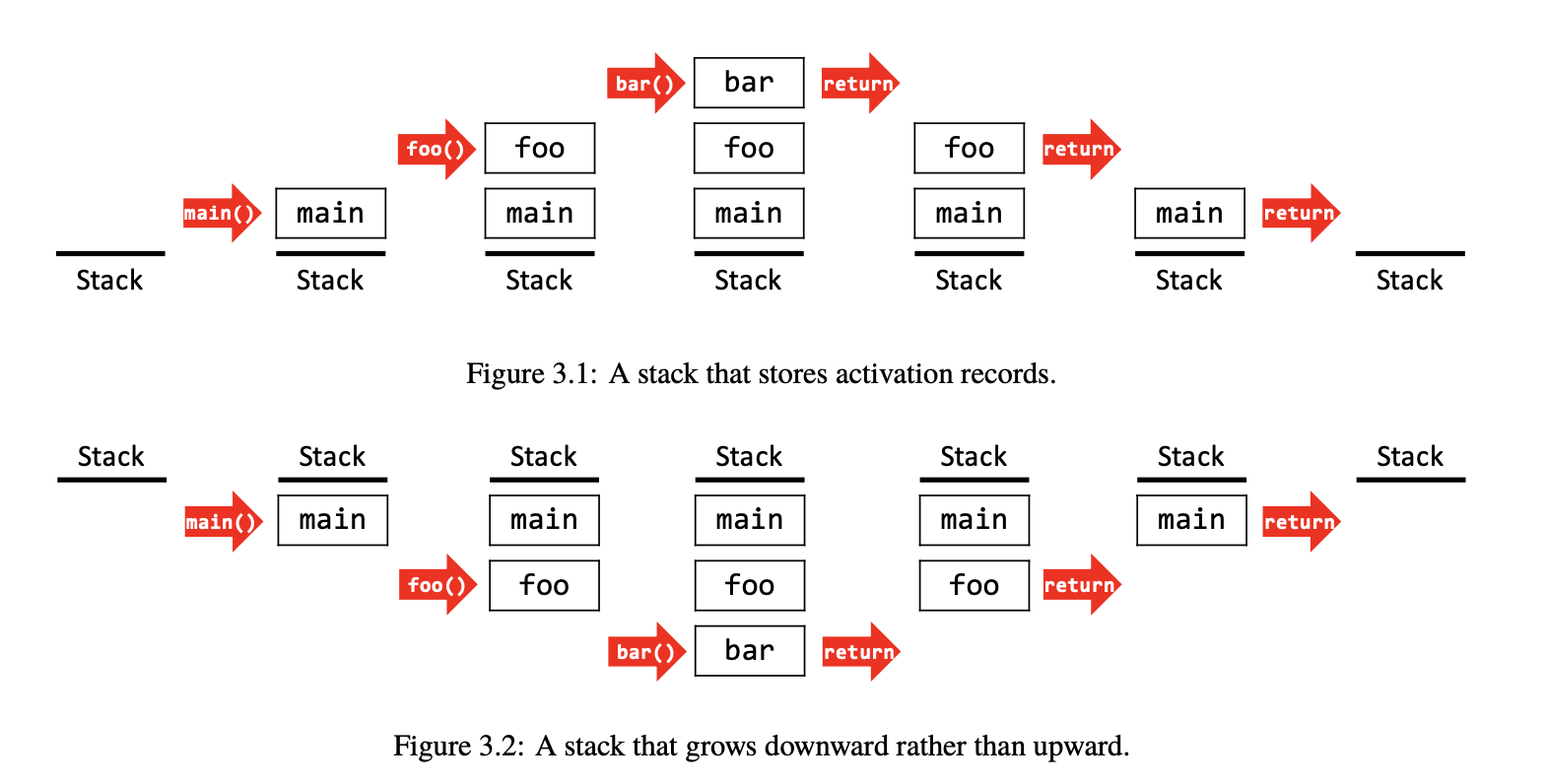
- program 一开始就会调用
main()函数,因而创建一条main()函数的 activation record 并放入栈顶; - 而后
main()函数调用foo()函数,因而创造一条foo()函数的 activation record 并入栈,放在栈顶,main()函数的上面; - 而后
foo()函数调用bar()函数,同样创造 activation record 并入栈顶. - 最里层的
bar()函数运行结束,从栈顶先移除它的 activation record; - 而后
foo()函数运行完成,从栈顶移除 activation record; main()函数运行结束,栈被清空.
这是一个比较简单的过程,现在我们加入 variables 来进一步理解,看第二个稍微复杂一些的例子.
int plus_one(int x){
    return x + 1;
}
int plus_two(int x){
    return plus_one(x + 1);
}
int main(){
    int result = 0;
    result = plus_one(0);
    result = plus_two(result);
    cout << result;
}
program 首先调用 main() 函数,并先声明一个 local variable result(对应的 object 同时被创造,就是我们刚才说的仅在 variable 的 initialization 时的 reference semantics);而后main() 函数调用 plus_one() 函数,plus_one() 生成其 scope 下的 local variable x,将调用这个函数的 main() 函数中的 local variable result 的值 pass 给自己的 local variable x;而后 plus_one() 运行结束返回 x 的值加上 1 并 assign 给 result ,result 的值更新;而后 main() 函数又运行下一个函数 plus_two().
而这一过程在 stack 中是这样的一个流程:
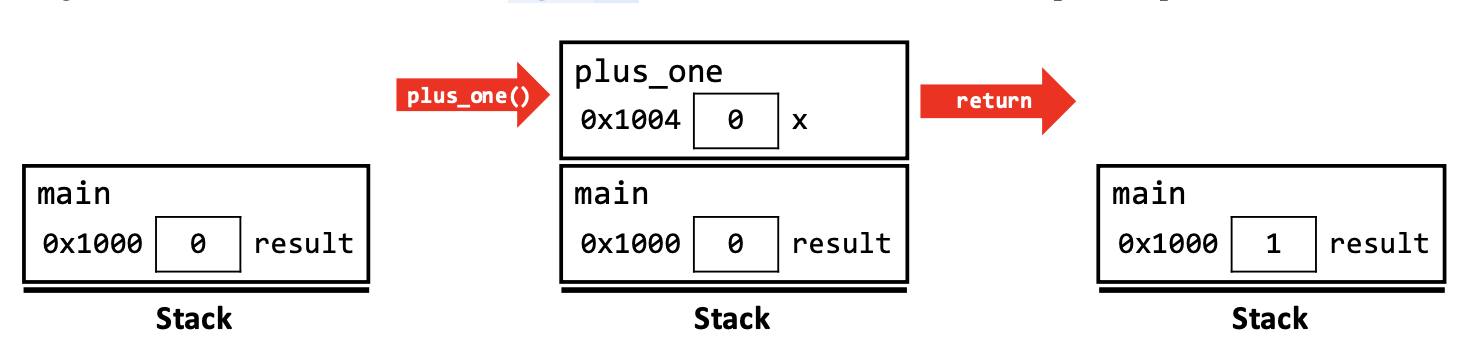
main()函数被调用,main()的 activation record 被创建.main()函数的执行过程中 local variableresult被声明,留出 memory 中的位置存放对应的 object,具体数据为 int 型的 1.plus_one()函数被main()函数调用,创建plus_one()的 activation record. 在被调用的同时,plus_one()函数生成在它的 scope 中的 local variablex,并通过函数的 pass by value,获取调用它的main()函数里的 local variableresult的值,并 pass 给自己的 local variablex.plus_one()对自己的 local variablex进行加一的操作,运行结束时把它的值作为函数的 return value,return 给调用自己的main()函数.main()函数获取plus_one()的 return 值的同时,把它 assign 给main()的 local variableresult.- 在完成 return 的过程后,
plus_one()运行结束并清除自己的 activation record,即出 stack. 现在 stack 中只剩下在栈底的main()函数的 activation record.
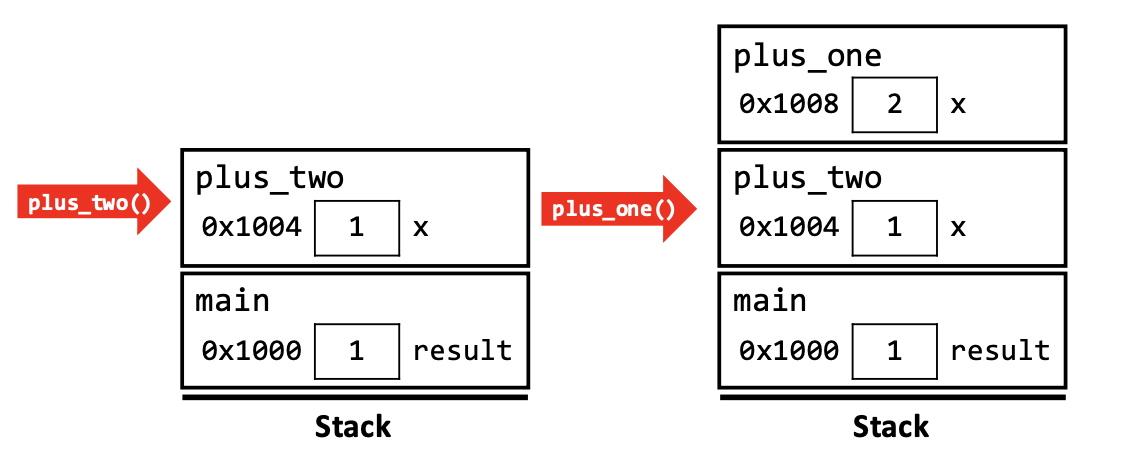
这就是从 program 开始运行一直到 result = plus_one(0); 这一行运行结束的全过程. 现在来到下一行 result = plus_two(result);. 从刚才的状态开始.
main()调用plus_two()函数,plus_two()的 activation record 被创建. 注意到,plus_two()的 activation record 在 memory 中的位置会被安排到刚才被清除的plus_one()的 activation record 的位置上!plus_two()在创建 activation record 的同时也一样从main()中获取result的值并赋给自己初始的 local variablex.plus_two()调用plus_one()函数,创建 activation record,传参,把自己的local variablex传给plus_one的 local variablex. 这里注意的是,我们可以发现这两个函数的变量名都叫做x,但是这并不会冲突,因为它们储存在不同的 activation record 中. 在plus_one的 scope 中x指代plus_one中的 object,而在plus_two的 scope 中指代plus_two中的 object. 所以程序识别 local variable name 其实是以一个 activaion record 为单位的,因由 scope 决定!多个 activation record 同时存在时,里面可以有相同的局部变量名,这也就是我们之前说的一个 variable name 绑定了一个 object 就不能绑定其他 object了,除非出 scope. 当然我们自然而然地想到 global variable 肯定不能这样.- 之后各函数依次运行结束并清除 activation record 出栈.
7.2.4 pass-by-reference function 的 stack frame 运行例
上面都是只有 pass by value 的 parameter 的函数,现在看第三个例子:一个有 pass by reference 的 parameter 的函数.
Pass-by-reference 就是在创建初始 variable 时用了 reference semantics. 实际上,**函数中传参就是用等号赋值!只不过这一步可以跨域 activation record 到调用本函数的另一个函数的 activation record 中去. 比如 void swap(int &x, int &y); 而我们在 main() 函数里 call 它,swap(x,y);. 这就是等于 int &x = x;, int &y = y, 由于是跨 scope 的所以这里同一个 variable x 可以指代两个不同的 object,完成这个赋值行为. **
按照我们之前学习的, int &a = b 就是给 b 指代的 object 取另一个名字叫做 a,因而 pass-by-reference 的 local variable 就是给调用自己的函数传过来的它的作为参数的 local variable 所指代的 object 取的一个新名字. 这一个传参过程是跨 activation record 的. 我们看下面这个例子.
void swap(int &x, int &y){
    int tmp = x;
    x = y;
    y = tmp;
}

int main(){
    int a = 3;
    int b = 7;
    cout << a << "," << b << endl; //3,7
  swap(a, b);
    cout << a << "," << b << endl; //7,3
}
我们来综合刚才对 & 的学习以及对 call stack 的学习来看这一流程:
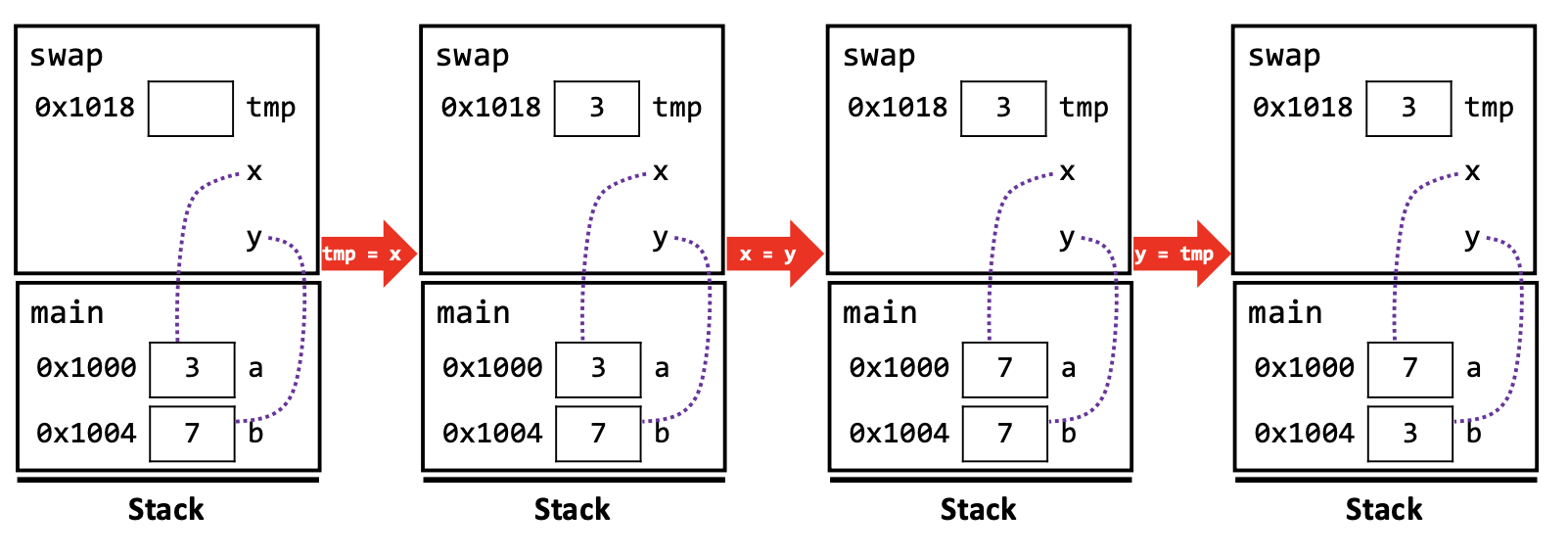
- 程序创建
main()函数的 activation record,大小包含两个 local variable的 space.main()函数运行. - 运行到
swap()时为其创建 activation record,大小包含三个 local variable,其中两个是main()的 local variablea和b的 reference,另外一个tmprefer to 自己的一个 temporary object. swap()进行我们熟悉的变量交换操作. 这里x和y都是引用参数,但我们要记得我们说的:reference semantics 仅在 initialization 时,而这里是 value semantics. 这里的x = y把y(b) 所指代的 object 的值赋给x(a) 所指代的 object. 自然地,这一过程在两个 activation record 中是同步进行的,因为动的是同两个 object.- 结束清除 activation record 而出栈.
7.3 Procedural Abstraction 过程抽象化
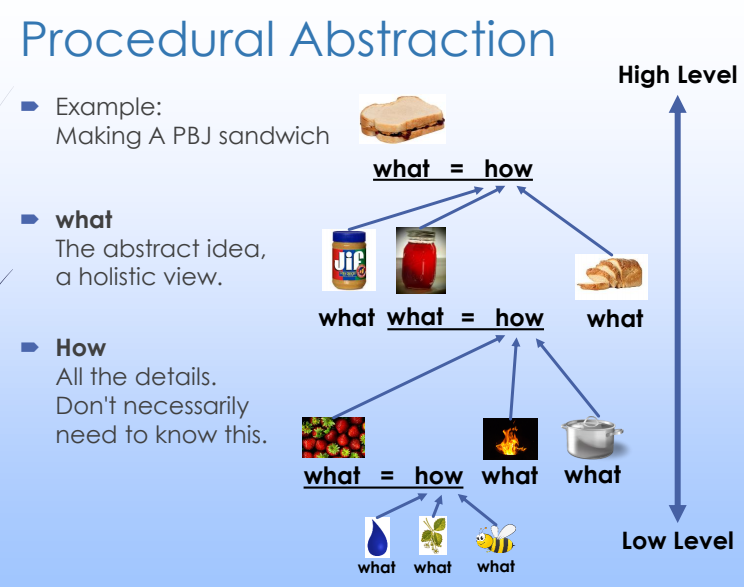
procedural adstraction 把 what code does 和 how it works 给分开了. Functions 就是 C++ 中过程抽象化的主要工具.
7.3.1 Interfaces 和 implementations
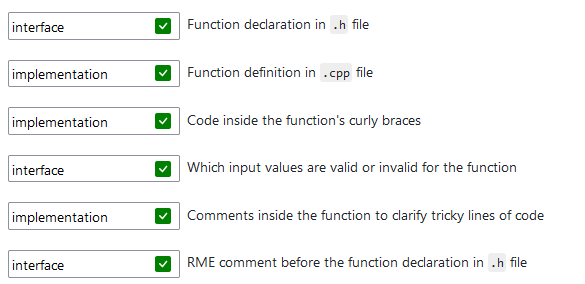
CS terminology 中,interface 指用来 specify what something does 的东西,而 implementation specifes how it works.
#include <iostream>
#include <vector>
using namespace std;
double mean(vector<double> v) //interface
{
    // implementations
}
int main() {
    vector<double> v;
    double m = mean(v); // only care about the interface here
    cout << m;
}
7.4 Unit Testing
7.4.1 Testing 的类型
Testing 有以下几个类型
- Unit testing: One piece at a time (e.g., a function) 它的好处是
(1) Find and fix bugs early (2) Test smaller, less complex, easier to understand units.
- System Testing: Test Entire project (code base)
我们在 unit testing 之后应该进行 system testing 来确保代码的衔接正确
- Regression testing: 在更改代码之后,Automatically run all unit and system tests.
这一节课提供了 unit_test_framework.hpp, 其中定义了一个 macro(宏) 来方便写 Unit Tests. 因而写 project 只需要把这个文件 include 进 testing 的 cpp 文件就可以了
#include "unit_test_framework.hpp"
7.4.2 Test Cases 的类型
- Type prehibited: 类型不一致可能会导致 compiler error 的 Testing,不需要写.
- Requires prohibited: 违反 requirements 的 tests. 不需要写.
- Simple: 一般的 test cases.
- Edge (Special): 一些边缘问题,比如只有一个元素的 array 和 vector,测试众数的时候设置多个众数(应当取最小的)等.
- Stress: 大型的数据,如几万个元素的vector. 这节课不需要写.
7.4.3 Unit-Test Framework 教程
比如测试一个叫做 arrays.cpp 的文件,我们应该新建一个文件叫 arrays_tests.cpp. 在其中引用 framework.
如果其中包括两个叫做 slideRight() 的函数和 flip() 的函数,那么就在 arrays_tests.cpp 中写一些叫做 TEST(test_slide_right_123) 和 `TEST(test_flip_123) 这样的函数.
#include "arrays.hpp"
#include "unit_test_framework.hpp"

// A helper function for comparing arrays. Returns true if the
// arrays are the same size and contain the same values.
bool compare_arrays(int arr1[], int size1, int arr2[], int size2) {
  if (size1 != size2) {
    return false;
  }

  for (int i = 0; i < size1; ++i) {
    if (arr1[i] != arr2[i]) {
      return false;
    }
  }

  return true;
}

// We define a test case with the TEST(<test_name>) macro.
// <test_name> can be any valid C++ function name.
TEST(test_slide_right_1) {
  int testing[] = { 4, 0, 1, 3, 3 };
  int correct[] = { 3, 4, 0, 1, 3 };
  slideRight(testing, 5);
  ASSERT_TRUE(compare_arrays(testing, 5, correct, 5));
}

TEST(test_flip_1) {
  int testing[] = { 4, 0, 1, 3, 3 };
  int correct[] = { 3, 3, 1, 0, 4 };
  flip(testing, 5);
  ASSERT_TRUE(compare_arrays(testing, 5, correct, 5));
}

TEST_MAIN() // No semicolon! 这就是宏中定义的语法
在写完之后,用编译器制作出 .exe 文件
g++ -Wall -Werror -pedantic -g -std=c++11 arrays.cpp arrays_tests.cpp -o arrays_tests.exe

./arrays_tests.exe

# Running test: numbers_are_equal
# PASS
# Running test: true_is_true
# PASS

# *** Results ***
# ** Test case 'numbers_are_equal': PASS
# ** Test case 'true_is_true': PASS
# *** Summary ***
# Out of 2 tests run:
# 0 failure(s), 0 error(s)
这个 framework macro 最大的特点是:还可以用制作出来的 .exe 只跑其中的一个函数.
./arrays_tests.exe numbers_are_equal
# Running test: numbers_are_equal
# PASS

# *** Results ***
# ** Test case 'numbers_are_equal': PASS
# *** Summary ***
# Out of 1 tests run:
# 0 failure(s), 0 error(s)
7.4.4 Framework macro提供的特殊 Assert 函数
| Assertion | Description |
|---|---|
ASSERT_EQUAL(first, second) |
相等 |
ASSERT_NOT_EQUAL(first, second) |
不等 |
ASSERT_TRUE(bool value) |
true |
ASSERT_FALSE(bool value) |
false |
ASSERT_ALMOST_EQUAL(double first, double second, double precision) |
$ |
ASSERT_SEQUENCE_EQUAL(first, second) |
arrays, vectors, lists 相等 |