- 24 Recursion
- 24.1 如何写 Recursion
- 24.2 Tail Recursion: 获得 Constant Space Cost
- 24.3 Structural Recursion
24 Recursion
一个 Recursive definition 或称 Mathematical function 或称 Computer function 指的是一个 refers to itself 的 definition.
更加 precisely 地说,recursion 是一种 repetition through self-reference.
Recursion 分为两部分:Base case 和 Recursive step. 记得在 eecs 203 上说过:Recursion 就是 Mathematical Induction.
void annoyingSong(int numBottles) {
  if (numBottles == 0) {
    cout << "That's all folks!" << endl;
  } else {
    cout << numBottles << " bottles of beer on the wall." << endl;
  }

  annoyingSong(numBottles - 1);
  // a(n) = a(n-1)
}
再比如:factorial $$ n! = \begin{cases} n\cdot (n-1)!\;, \;n > 0 \ 1\;,\;n = 0\end{cases} $$
int factorial(int n) {
    if (n == 0) return 1;
    else return n * factorial(n-1);
}
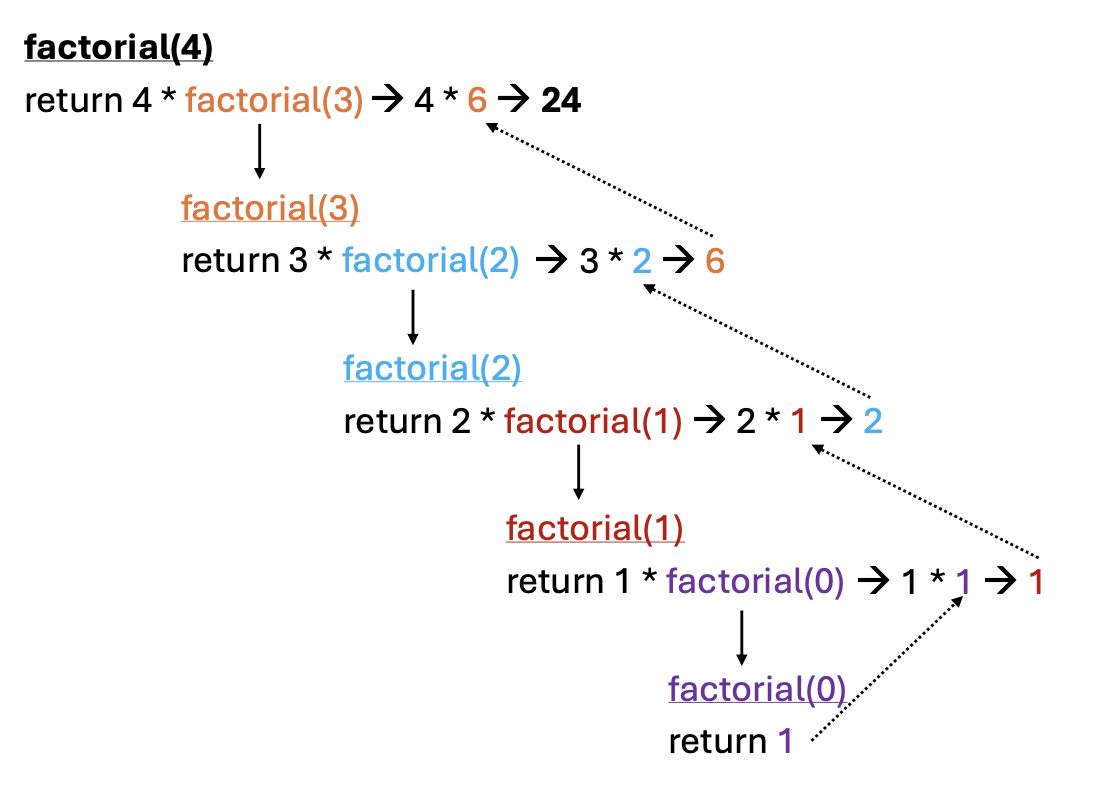
因而 factorial(4) 的 function call 的流程就是如下的:
24.1 如何写 Recursion
Step 1: 定义 Base Case
-
Base case 是情况最简单时(edge)function 的返回值
-
Base case 必须充分考虑,defined properly. 通常是 0/1 的时候。
-
有时候我们需要 multiple base cases!!(如203学过的)
Step 2: approch the base case
我们写的 inductive step 必须要 take us closer to the base case: 每次给出一个 step 的 answer 之后,problem size 必须减小。
Step 3: handle the one-step-smaller answer
假设我们已经取得了一个 solution to the problem that is one step smaller,我们应当如何把它放进 recursive call 中,以最后获取 main problem 的答案?(实际上就是:假设 inductive hypothesis 成立,那么如何前往下一步)
24.1.1 Some examples
- exponential $$ a^n = \begin{cases} a\cdot a^{n-1}\;, \;n > 0 \ 1\;,\;n = 0\end{cases} $$
c++
   int power(int a, int n) {
    if (n == 0)
       return 1;
     else
       return a * power(a, n-1);
   }
- countdown
```c++ void countdown(int n) { if (n == 0) cout << n << endl; else { cout << n << endl; countdown(n-1); // countdown from n-1 to 0 } }
// 第二种写法 void countdown(int n) { cout << n << endl; if (n > 0) coutdown(n-1); } ```
- sum
```c++ // 正确版本 int sum(int n) { if (n==0) return 0; else return n + sum(n-1); }
// wrong 1: int sum(int n) { if (n==1) // wrong: 没有 handle n==0 return 1; else return n + sum(n-1); }
// wrong 2: int sum(int n) { if (n==0) return 0; else return n + (n-1) + sum(n-2); // 只对 even n 有效果 }
// wrong 3: int sum(int n) { if (n==0) return 0; else return sum(n); // 没有 approach base case }
// wrong 4: int sum(int n) { int total = 0; if (n==0) return total; else { total += n; sum(n-1); // 没有把 inductive hypothesis 成立的结果传到 next problem 中 return total; } }
// wrong 5: int sum(int n) { if (n==0) return 0; else return n + sum(n--); // wrong: n--是先 evaluate再--的, 会把n传进去再--(此时已经没用了), 于是死循环 } ```
24.1.2 ex2: 通过 recursion 查看 t 是否在 array 里
这里有很多种写法
// 1. yes!
bool contains(int* begin, int* end, int t) {
  if (begin == end)
    return false;
  else
    return (*begin == t) || contains(begin + 1, end, t);
}

// 2. yes!
bool contains(int* begin, int* end, int t) {
  if (begin == end)
    return false;
  else if (*begin == t)
    return true;
  else
    return contans(begin+1, end, t);
}

// 3. yes!
bool contains(int* begin, int* end, int t) {
  return (begin != end) && ((*begin == t) || contains(begin+1, end, t));
}

// 4. yes!
bool contains(int* begin, int* end, int t) {
    if (begin == end)
    return false;
  else
    return (*(end-1) == t) || contains(begin, end-1, t);
}

// 5. yes!  从两边查看
bool contains(int* begin, int* end, int t) {
  if (begin >= end)
    return false;
  else {
    return (*begin == t) || (*(end-1) == t) || contains(begin+1, end-1, t);
  }
}
24.1.3 ex3: 判断 palindrome(回文数)
bool isPalindrome(string s) {
    if (s.size() < 2)   // 如果recur到size==1, 说明是回文数
    return true;
  else
    return s[0]==s[s.size()-1] && isPalindrome(s.substr(1, s.size()-2));    // 去除头尾的子str
}
24.1.4 ex4: 倒转 array
void swap(int* x, int* y) {
  int temp = *x;
  *x = *y;
  *y = temp;
}

void revHelp(int* left, int* right) {
    if (left >= right)
    return;
  else {
        revHelp(left+1, right-1);   // rev去除头尾的subarray
    swap(left, right);  // swap 头尾
  }
}

void reverseArray(int* a, int size) {
  revHelp(a, a+size-1)
}
24.1.5 Towers of Hanoi 汉诺塔

实际上:汉诺塔的整个流程可以分为这三步:
对于 n 层塔
- 先把 n-1 个东西从 A 中移动到 B
- 把腾出来的第 n 个东西从 A 中移动到 C
- 把 B 里面的 n-1 个东西移动到 C
然后就结束了。
而加入这三步其中的 recursion,详细的步骤是:
- 先把 n-1 个东西从 A 中移动到 B
1.1 先把 n-2 个东西从 A 中移动到 C
...
1.2 再把腾出来的第 n-1 个东西从 A 中移动到 B
1.3 把 C 中的 n-2 的东西移动到 B
...
-
把腾出来的第 n 个东西从 A 中移动到 C
-
把 B 里面的 n-1 个东西移动到 C
3.1 先把 n-2 个东西从 B 中移动到 A
...
3.2 再把腾出来的第 n-1 个东西从 B 中移动到 C
3.3 把 A 中的 n-2 个东西移动到 C
...
因而每次递归分为两个大移动 $T(n-1)$ 和一个小移动 $T(1)$。递推公式为 $T(n) = 2T(n-1) + 1$。
我们推一遍 $n=1,2,3$ 时的全过程:
最简单的是:
n=1,没有 $T(n-1)$,直接把 n 从source 移动到 dest.
然后是:
n=2,先把 1 个移动到 temp ($T(1)$),再把下面一个移动到 dest ($T(1)$),然后把 temp 上的移动到 dest ($T(1)$).
n=3,先把上面两个按照 n=2 的方法移动到 temp ($T(2)$),再把下面一个移动到 dest ($T(1)$),然后把 temp 上的移动到 dest ($T(2)$).
..
n=k,先把上面两个按照 n=2 的方法移动到 temp ($T(k-1)$),再把下面一个移动到 dest ($T(1)$),然后把 temp 上的移动到 dest ($T(k-1)$).
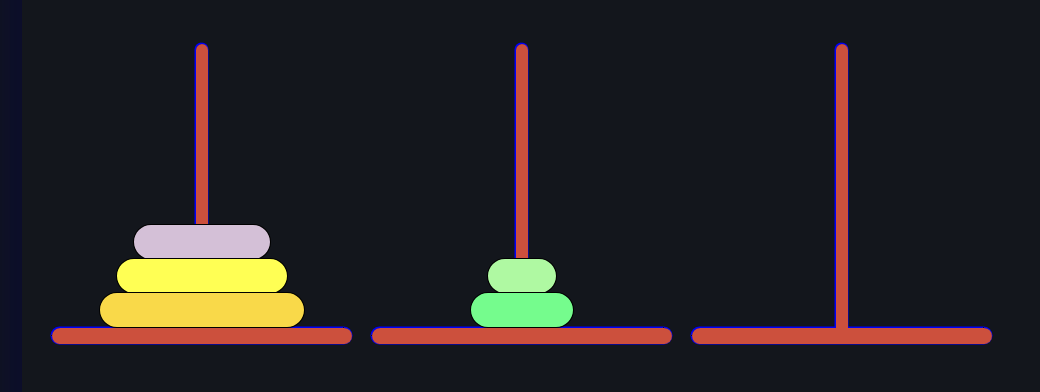
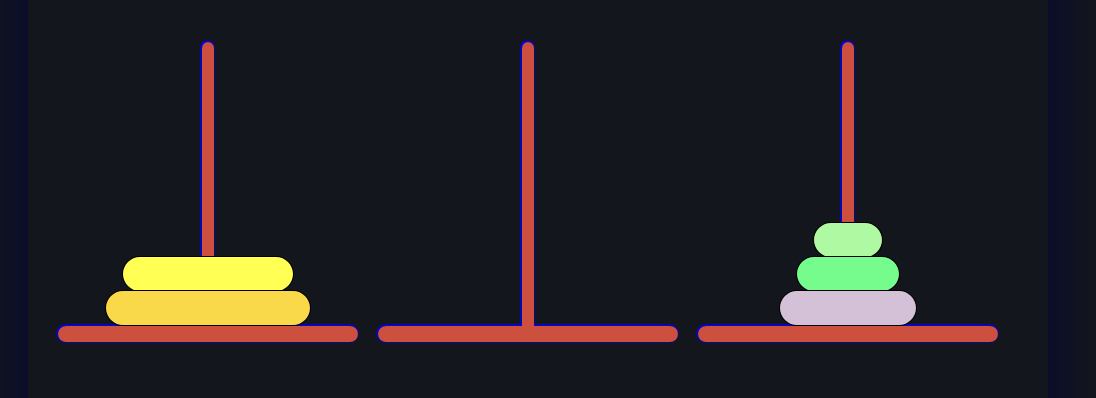
(我们可以发现一点:在 $n-1$ 到 $n-2$ 的 recursion 过程中:如果我们要把 $[n-1]$ 片 从 source 移动到 temp 上时,我们就要先把 $[n-2]$ 片 从 source 移动到 dest,然后把第 $n-1$ 片从 source 移动到 temp 上,然后再把 $[n-2]$ 片从 dest 移动到 temp 上。这说明:我们从上一层递归到下一层递归时,我们的三个 subquestion 中的三个柱子是要换位置的。 但是这个问题我们并不关心,因为 recursion 的结构已经自动包含了换位的行为了。)
因而我们的代码结构是:
void move(int n, string source, string dest, string temp) {
  if(n==1)
    cout << "Move from " << source << " to " << dest << endl;   // n==1 说明已经结束了
    else {
    move(n-1, source, temp, dest);
    move(1, source, dest, temp);
    move(n-1, temp, dest, source);
  }
}

void printHanoi(int n) {
  move(n, "A", "C", "B");
}
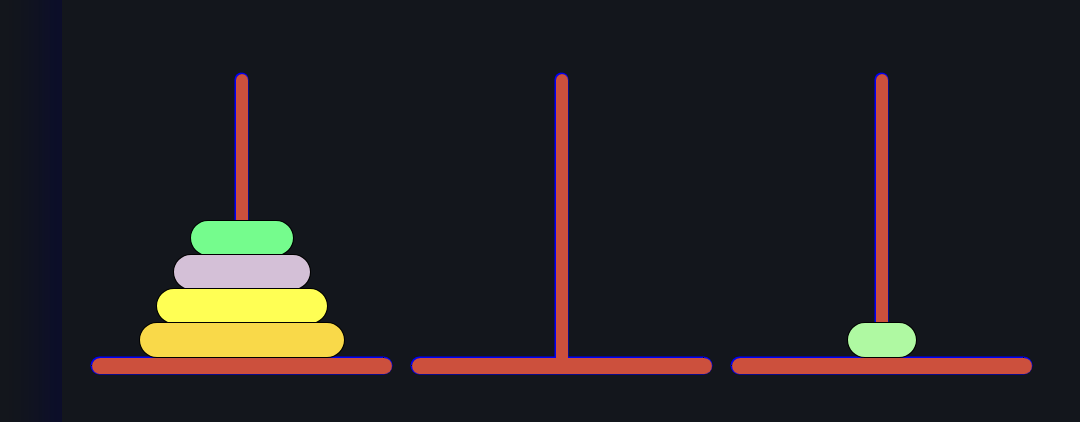
以下为笔者搬汉诺塔截的关键步骤(显示了换位)
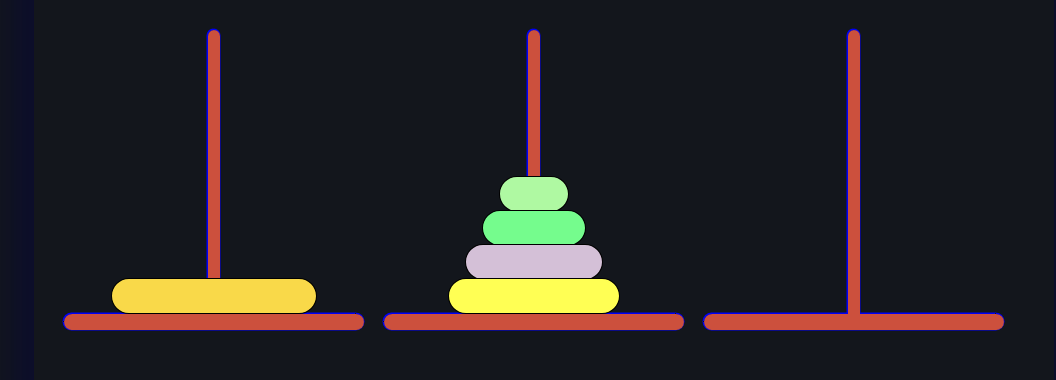
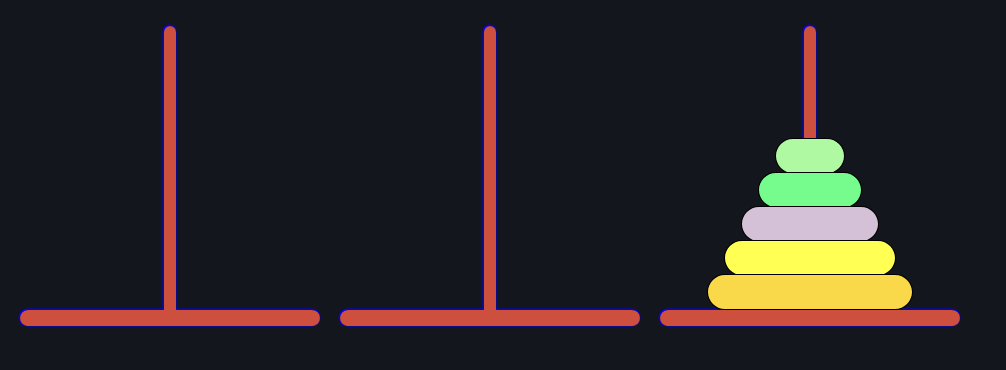
24.2 Tail Recursion: 获得 Constant Space Cost
24.2.1 Space Cost of Iteration && Recursion
我们看一个既可以用 iteration 又可以用 recursion 写的函数:
void revHelp(int *left, int *right) {
    while (left < right) {
    swap(left, right);
    ++left;
    --right;
  }
}
这个函数的 time complexity 是 ${n\over 2} \in O(n)$, 而 space cost 是 $1 \in O(1)$.
而我们用刚才的 recursion 来写的话:
void revHelp(int* left, int* right) {
    if (left >= right)
    return;
  else {
        revHelp(left+1, right-1);   // rev去除头尾的subarray
    swap(left, right);  // swap 头尾
  }
}
这个函数的 time complexity 也是 ${n\over 2} \in O(n)$, 但是 space cost 也是 ${n\over2} \in O(n)$.
因为我们会 recursively build $n\over 2$ 个 stack frame,并从后至前进行 swap,swap 完一个之后就消除一个 stack frame,最后消除完最开始建立起的第一个 stack frame 结束 function call.
但是如果我们这样写:
void revHelp(int* left, int* right) {
    if (left >= right)
    return;
  else {
    swap(left, right);
        revHelp(left+1, right-1);
  }
}
只是把后面两行换掉,我们就得到了 $1 \in O(1)$ 的 constant 的 space cost. 因为当我们把 recursive call 放在整个函数的最后一步来 return 时,我们就在 recursive call 之后把原本的 stack frame 消除了,并立刻在原位置建立起了新的 stack frame。因而,整个 function call 的过程中我们一直保持只使用一个 stack frame 的 memory,极大地减小了 space cost.
这种 Recursion 就叫做 Tail Recursion: 在函数的最后一步进行 Recursive Call,从而从始至终只使用一个 stack frame.
24.2.2 Accumulator-Passing Style: 重写 Factorial 为 Tail Recursion
我们看到原本写的 Factorial 函数:
int factorial (int n) {
    if (n==0)
    return 1;
  else
    return n * factorial(n-1);
}
这看起来是一个 Tail Recursion
但是不是!
因为我们 recursively call factorial(n-1) 的时候,我们外面还有一个 n *,这就导致前一个 stack frame 还没有结束,我们就先引入了后一个 stack frame.
最后一个 function 会先 call 出所有的 $n$ 个 recursive stack frame 再一个一个运行并从后往前退出,因而 time complexity = $n \in O(n)$.
但是这个问题很好解决
我们通过把前一个 $n$ 的值放进 parameters 里来把它改成 tail recursion:
int factHelp(Int n, int prodSoFar) {
  if (n == 0)
    return prodSoFar;
  else
    return factHelp(n - 1, n * prodSoFar)
}

int factorial(int start) {
  return factHelp(start, 1);
}
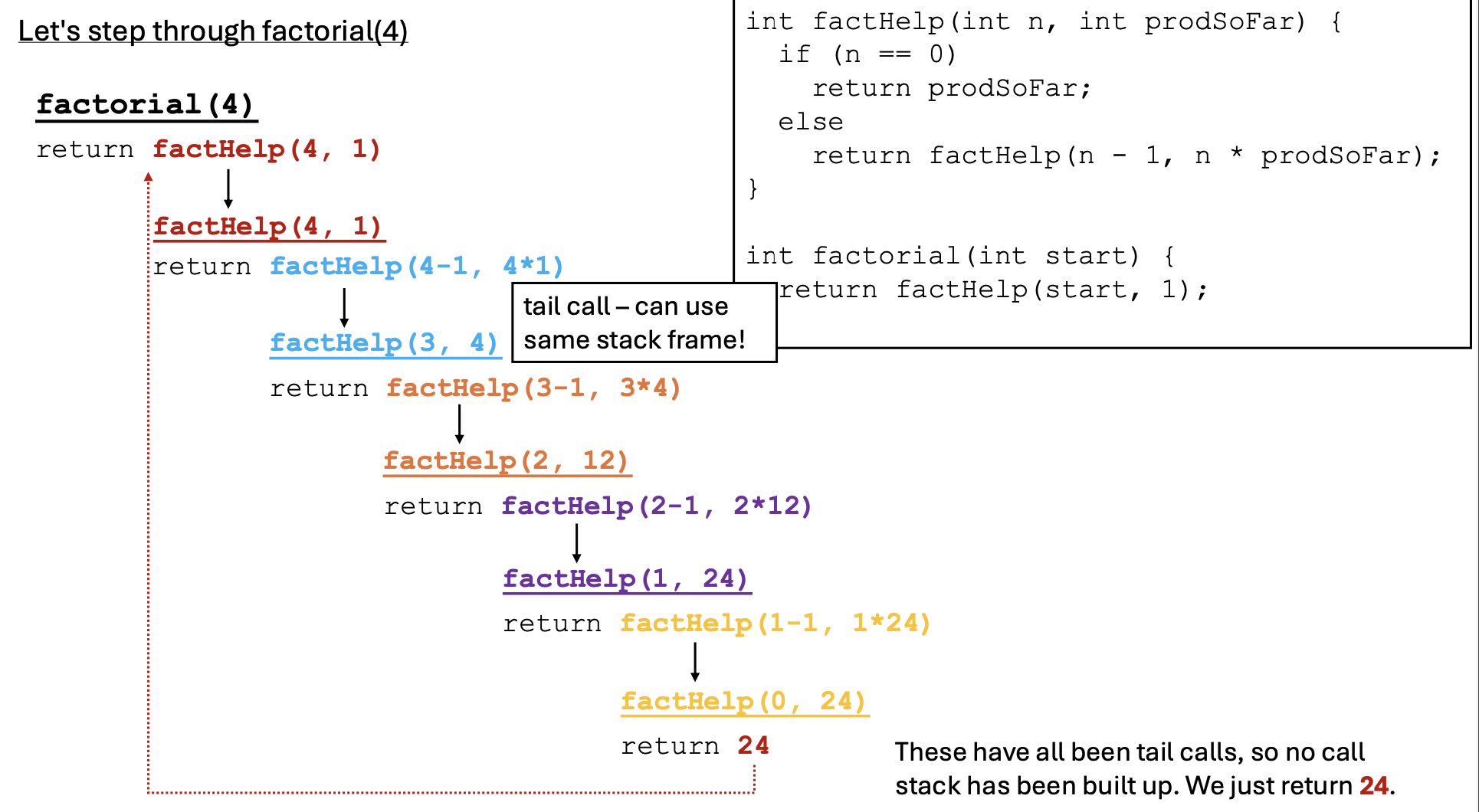
这个 factorial 函数的 space cost 为 $1 \in O(1)$.
它对应的 iterative solution 为:
int factIter(int start) {
  int n = start;
  int prodSoFar = 1;

  while(true) {
        if (n==0)
      return prodSoFar;
    prodSoFar = n * prodSoFar;
    n = n-1;
  }
}
这种 revise 一个 non-tail recursion 为一个 tail recursion 的方式叫做 Accumulator-passing style(APS).
24.3 Structural Recursion
24.3.1 Recursion in Linked List
24.3.1.1 recursively 理解 linked list 的结构
我们可以认为一个 list 是 either:
- empty
or
- 一个 datum 和一个 sublist
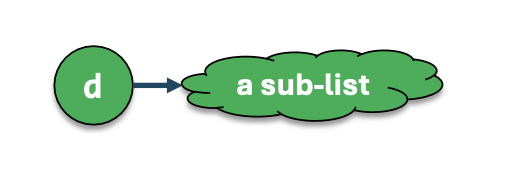
24.3.1.2 recursively processing a linked list
计算所有元素的 sum:
int sum(Node* n) {
  if (n == nullptr)
    return 0;
  else
    return n->datum + sum(n->next);
}
返回最后一个元素:
int lasr(Node *n) {
    if (n->next == nullptr)
    return n->datum;
  else
    return last(n->next);
}
获取值为 val 的元素个数:
int count(Node* n, int val) {
  if (n == nullptr)
    return 0;
  else {
    int countInRest = count(n->next, val);
    if (n->datum == val)
      return 1+countInRest;
    else
      return countInRest;
  }
}

另一种写法:
int count(Node* n, int val) {
    return (n->datum==val) + count(n->next, val);
}
获取最大值
int max(Node* n) {
    if (n->next == nullptr)
    return n->datum;
  else {
    int maxInRest = max(n->next);
    // 用i和[1,i-1]中的max相比, 得到[1,i]中的max
    if (n->datum > maxInRest)
      return n->datum;
    else
      return maxInRest;
  }
}
24.3.2 另一种 ADT: tree
我们这里讲的 tree 局限于 binary tree.
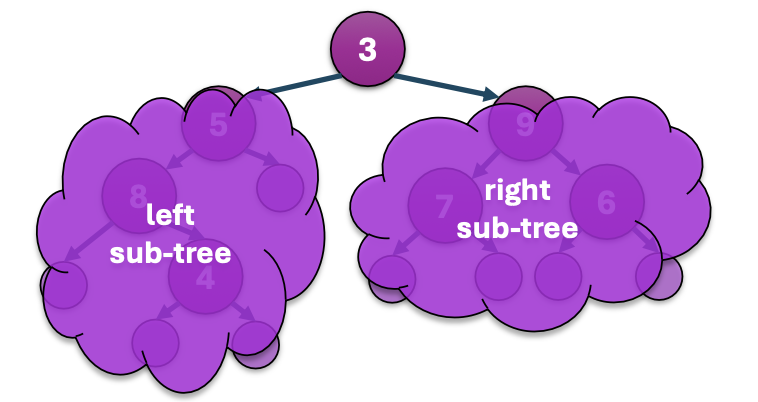
类似于对 Linked list 的 Recursive definition,我们这样 define binay tree:
一个 binary tree 为 either:
- empty
or:
- 一个 datum with left and right sub-trees.
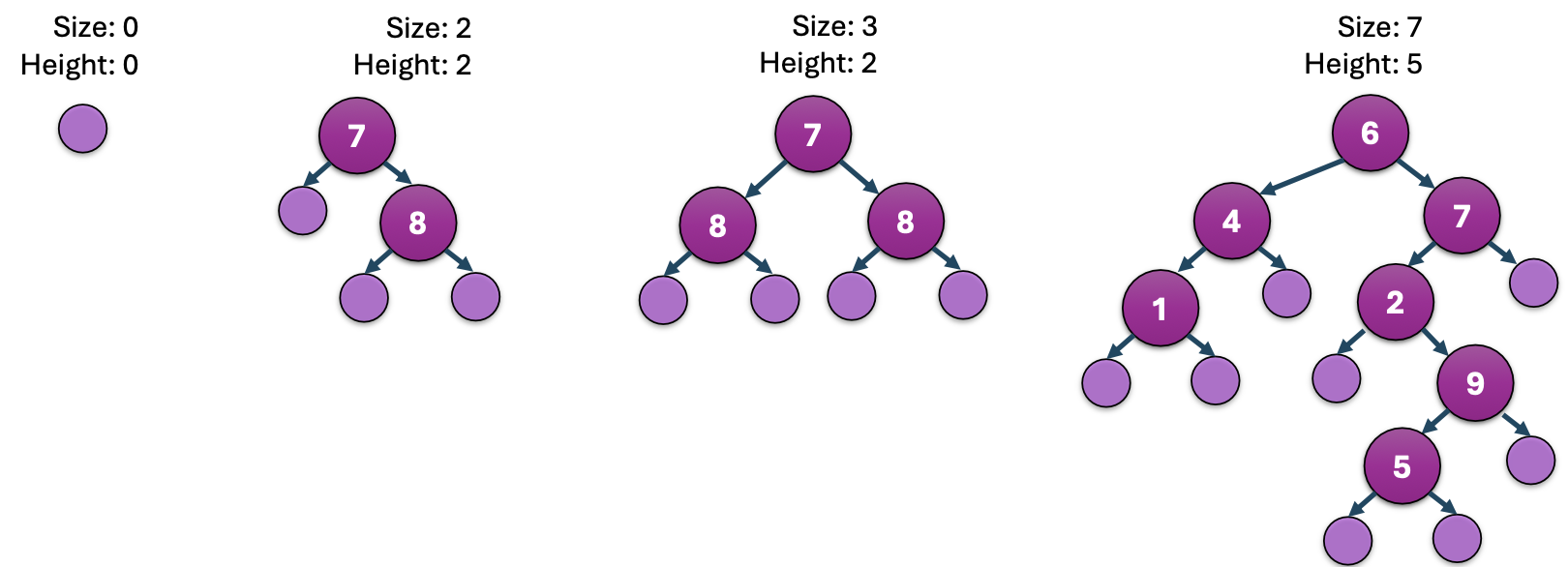
一个 tree 有两种 measure 方式:
- by size:tree 中 elements 的个数
- by height: 即 maximum depth,the longest chain of nodes from root to leaf.
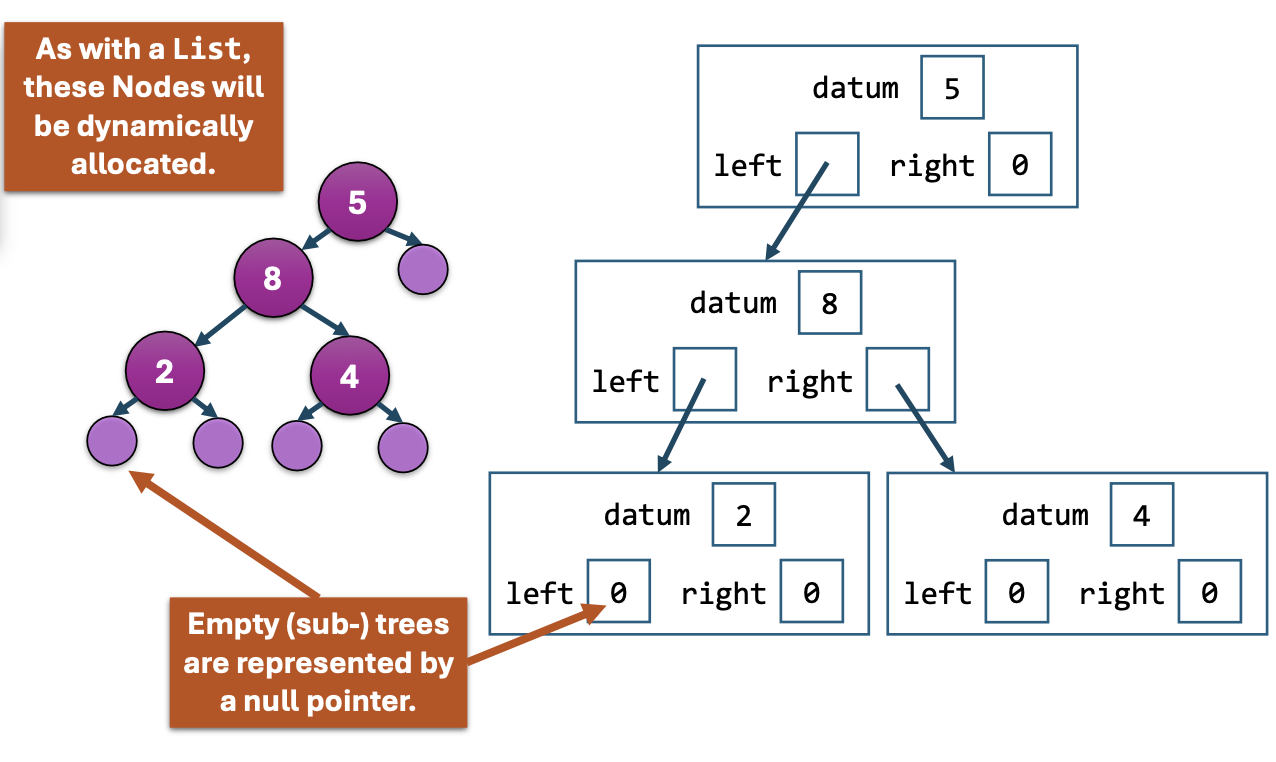
24.3.2.1 Tree 的 Data Representation
一个 tree 的基本单位是 Node:
struct Node {
    int datum;
  Node *left;
  Node *right;
}
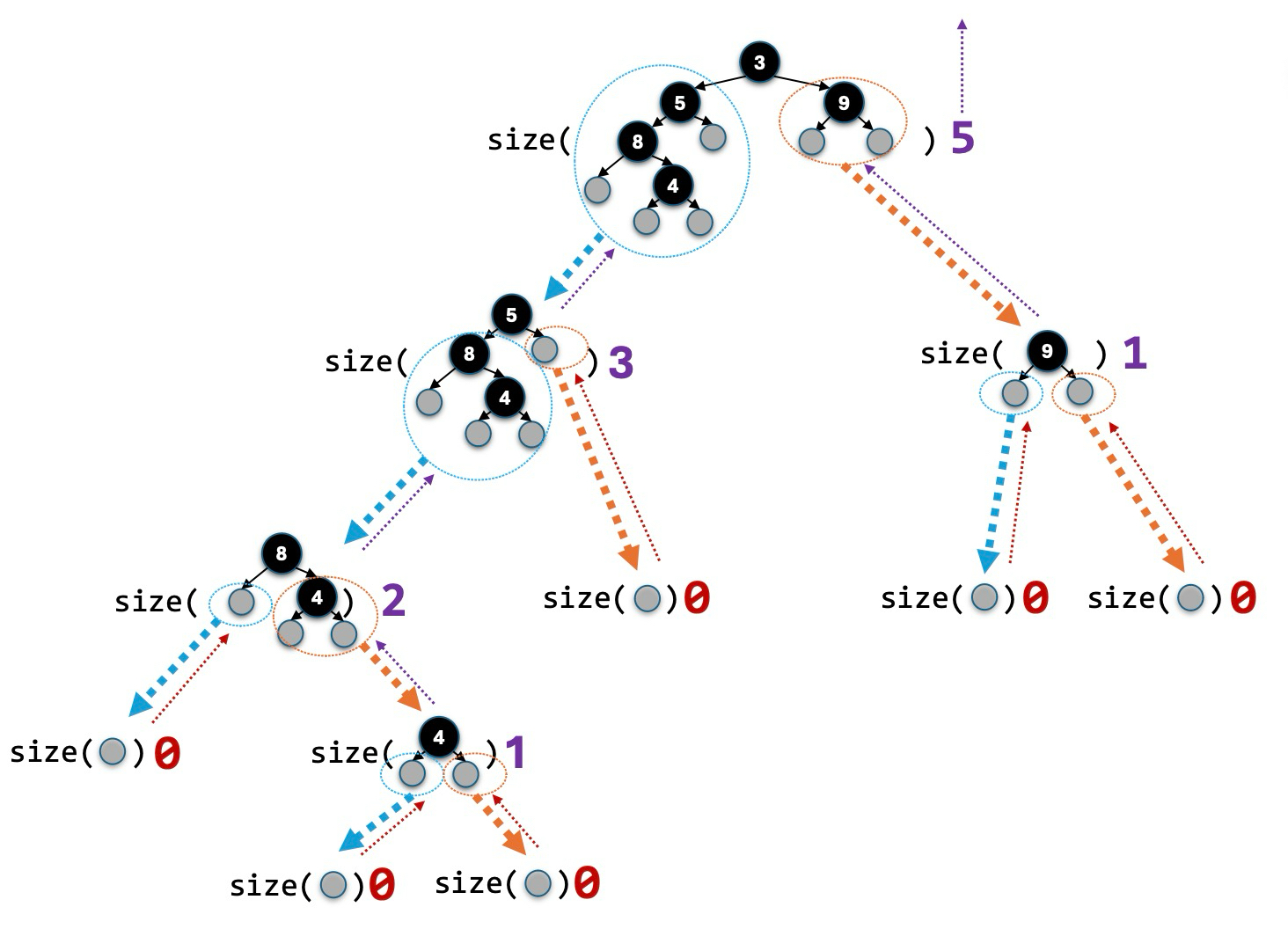
24.3.2.2 计算 Tree 的 size
int size(Node *node) {
    if (node == nullptr)
    return 0;
  else
    return 1 + size(node->left) + size(node->right);
}
24.3.2.3 计算 Tree 的 height
int height(Node *r) {
  if (r == nullptr)
    return 0;
  else
    return 1 + max(height(r->left), height(r->right))
}
24.3.2.4 计算 Tree 的所有元素和
int sum(Node* r) {
  if (r==nullptr)
    return 0;
  else
    return r->datum + sum(r->left) + sum(r->right)
    // 本datum和左右subtree的sum的和
}
24.3.2.5 计算 Leaves 的数量
int numLeaves(Node* r) {
  if (r == nullptr)
    // 说明这个 Node 是空的, 不是 leaf
    return 0;
  else if ((r->left == nullptr) && (r->right = nullptr))
    // 说明这个 Node 没有 subtree 了, 因而自身是单个 leaf
    return 1;
  else
    // 说明这个 Node 还有 subtree, 因而是左右 subtree 中的 leaves 总数
    return numLeaveds(r->left) + numLeaves(r->right);
}
24.3.2.6 查看 tree 中是否有值为 val 的元素
bool contains(Node *r, int val) {
  if (r == nullptr)
    // 搜索到底了还没有, 返回 false
    return false;
  else
    return (r->datum == val) || contains(r->left, val) || contains(r->right, val);
    // 自己是 or 左右subtree里有
}
24.3.2.7 Traverse 一个 tree
有三种 common tree traversals:
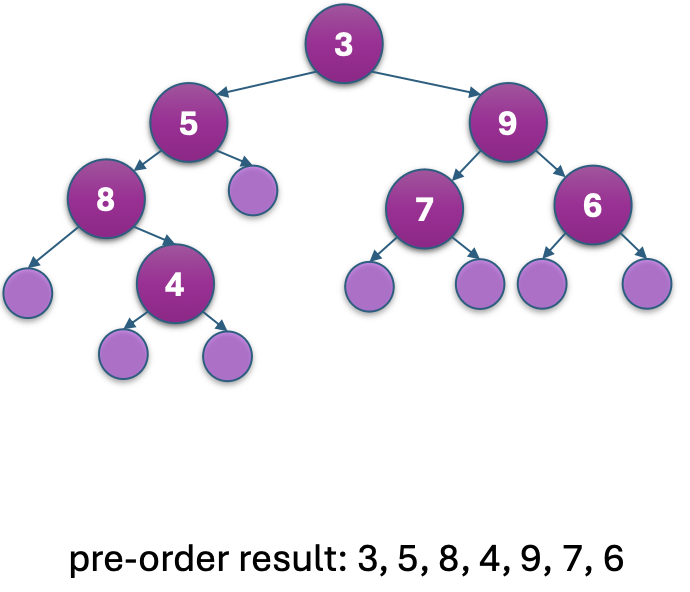
- Pre-order(前序遍历): 先 visit curent node 再 visit 其 children
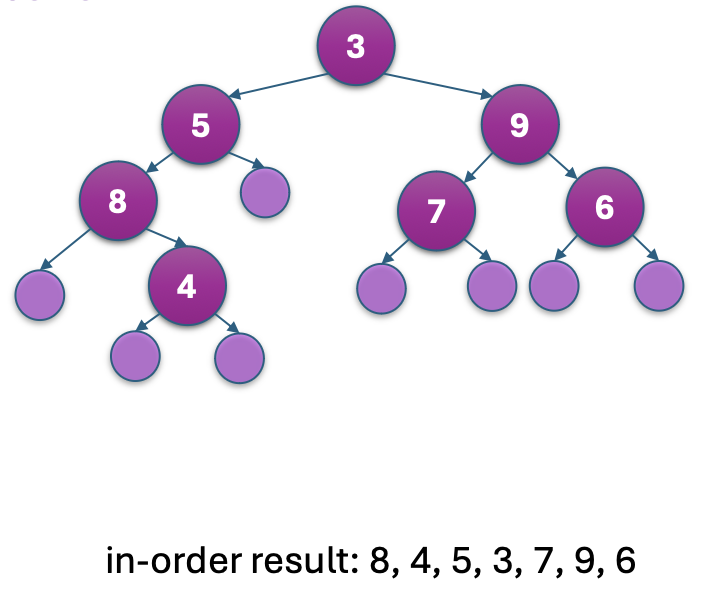
- in-order(中序遍历): visit current node between visit 其 children
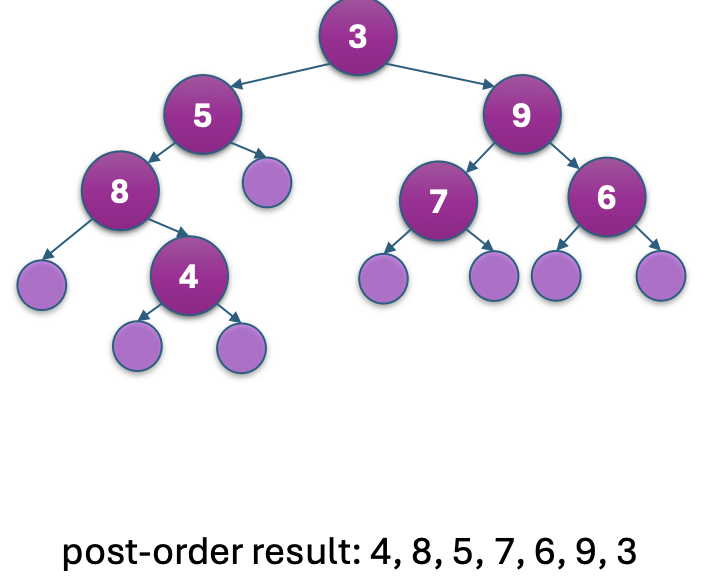
- Post-order(后序遍历): 先 visit 其 children 再 visit current node
24.3.2.7.1 pre-order traversal
void preOrder(Node* root) {
  if (root != nullptr) {
    // here: process root
    preOrder(root->left);
    preOrder(root->right);
  }
}
24.3.2.7.2 In-order traversal
void inOrder(Node* root) {
  if (root != nullptr) {
    inOrder(root->left);
    // here: process root
    inOrder(root->right);
  }
}
24.3.2.7.3 Post-order traversal
void postOrder(Node* root) {
  if (root != nullptr) {
    postOrder(root->left);
    postOrder(root->right);
    // here: process root
  }
}
24.3.2.8 Recursion 的类型
一个 recursive function 是
- linear recursive 的:if it 每次至多 makes one recursive call
例子: factorial, list max
-
tail recursive 的: if 它是 linear recursive 的,并且它的 recursion call 是 tail recursion.
-
tree recursive 的:if 它可能会 make more than 1 recursive call.
例子: tree size, height
下面是一个典型的 tree recursive 的 function:Fibonacci Sequence.
int fib(int n) {
    if (n <= 1)
        return n;
  else
    return fib(n-1) + fib(n-2);
}
$$ F(n) = \begin{cases} 0\;,\; n=0\ 1\;, \;n =1 \ F(n-1) + F(n-2)\;,\;n > 1\end{cases} $$
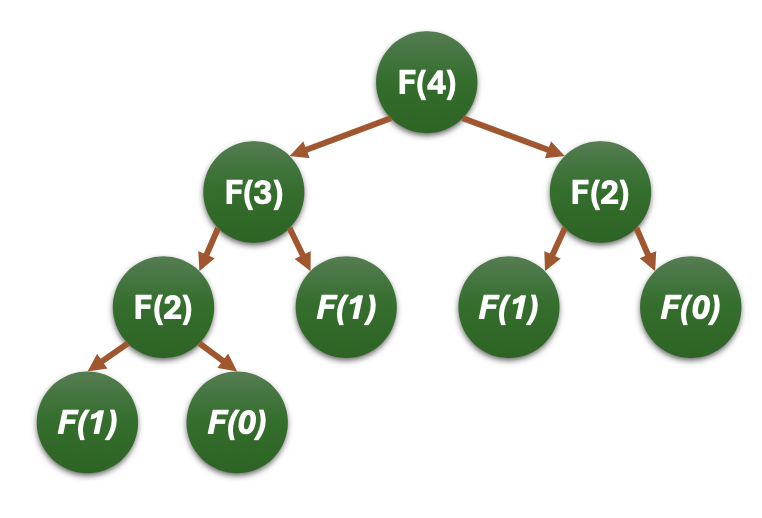
tree recursive 的就是过程图是 tree 的 recursion;linear recursive 的就是过程图是一根线的 recursion.